
Introduction
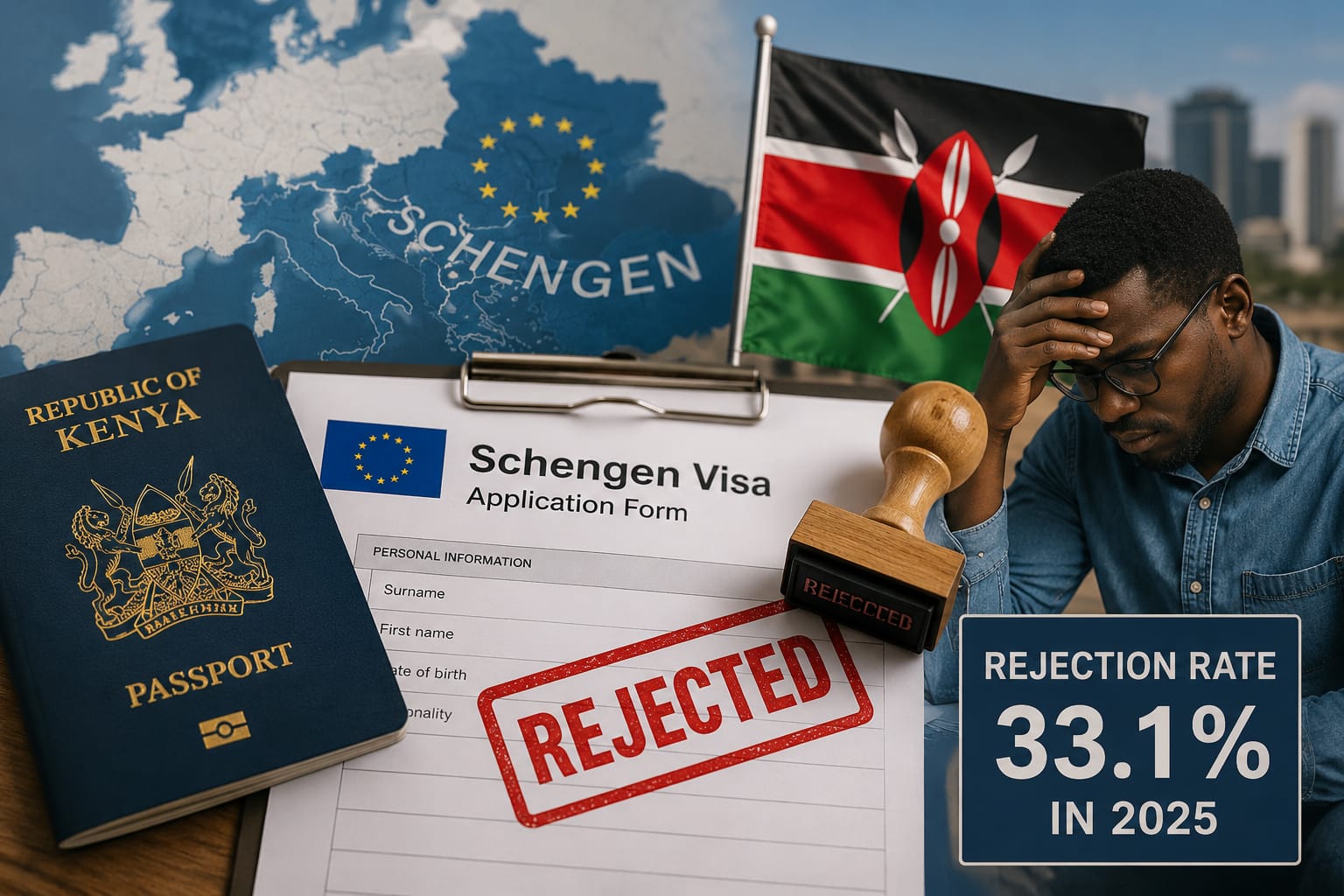
More than 25,000 Schengen visa applications submitted in Kenya were rejected in 2025, according to European Commission data. A total of 77,760 applications were lodged, with 25,227 not resulting in a visa, pushing Kenya’s rejection rate to 33.1%, significantly above the global average of 14.6%. The figures also show substantial differences between Schengen consulates in Nairobi, with some recording considerably higher refusal rates than others.
33.1% Visa Rejection Rate in Kenya
Kenya’s Schengen visa rejection rate increased from approximately 29.1% in 2024 to 33.1% in 2025. The country recorded 77,760 applications and 25,227 refusals, placing its rejection rate at more than twice the worldwide average. At the same time, the number of visa decisions made by Schengen consulates in Kenya increased by nearly 18%, reflecting growing demand for travel to Europe.
Significant Differences Between Consulates
The European Commission’s figures show major differences depending on which Schengen country processed the application. Norway recorded the highest refusal rate at 60.9%, compared with 35.6% in 2024. Sweden processed the largest number of applications, approximately 15,699, with a refusal rate of around 40%. Belgium and Hungary also recorded refusal rates of approximately 40%, while other destinations reported considerably lower figures.
Refusal Rates by Schengen Country
Among the other consulates in Nairobi, Spain recorded a 16.9% refusal rate, followed by Switzerland at 18.7%, the Netherlands at 19.4% and Italy at 19.9%. Greece recorded 23.5%, France 26.2% and Germany 29%. These figures demonstrate that applicants faced significantly different outcomes depending on the Schengen country responsible for processing their applications. The European Commission did not provide a specific explanation for the high refusal rates recorded by some consulates.
Global Schengen Visa Trends
Globally, more than 12 million short-stay Schengen visa applications were submitted in 2025, representing an increase compared with 2024. More than 10 million visas were issued, while the global refusal rate declined slightly from 14.8% in 2024 to 14.6% in 2025. This contrasts with Kenya, where the refusal rate increased during the same period, highlighting a notable difference between the Kenyan market and the overall global trend.
Schengen Visa Requirements for Kenyan Applicants
Kenyan passport holders travelling to the Schengen Area with a tourist visa may generally stay for up to 90 days within any 180-day period. Applicants must submit their application to the embassy or consulate of the country where they intend to spend the majority of their trip. A valid travel insurance policy with minimum coverage of €30,000 is mandatory, while applicants are also expected to demonstrate sufficient financial means, including approximately €100 per day to support themselves during their stay.
Visa Conditions and Overstay Risks
Once a Schengen visa is issued, travellers must comply with the conditions attached to it. Tourist visa holders are not permitted to work in the Schengen Area and must respect the maximum permitted stay. Travellers who overstay may face fines, detention or deportation, while an overstay can also make it more difficult to obtain future Schengen visas. Applicants are therefore expected to demonstrate that their travel plans are genuine and that they intend to comply with the conditions of their visa.
Summary
Kenya recorded a 33.1% Schengen visa rejection rate in 2025, with more than 25,000 applications refused, compared with a global refusal rate of 14.6%. The figures also reveal substantial differences between Schengen consulates, with refusal rates ranging from 16.9% in Spain to 60.9% in Norway. Despite the increase in global Schengen visa applications and a slight decline in the worldwide refusal rate, Kenya experienced a significant rise in refusals compared with 2024. The data highlights the importance of submitting a complete application that demonstrates the applicant’s travel purpose, financial capacity and compliance with Schengen visa conditions.

