
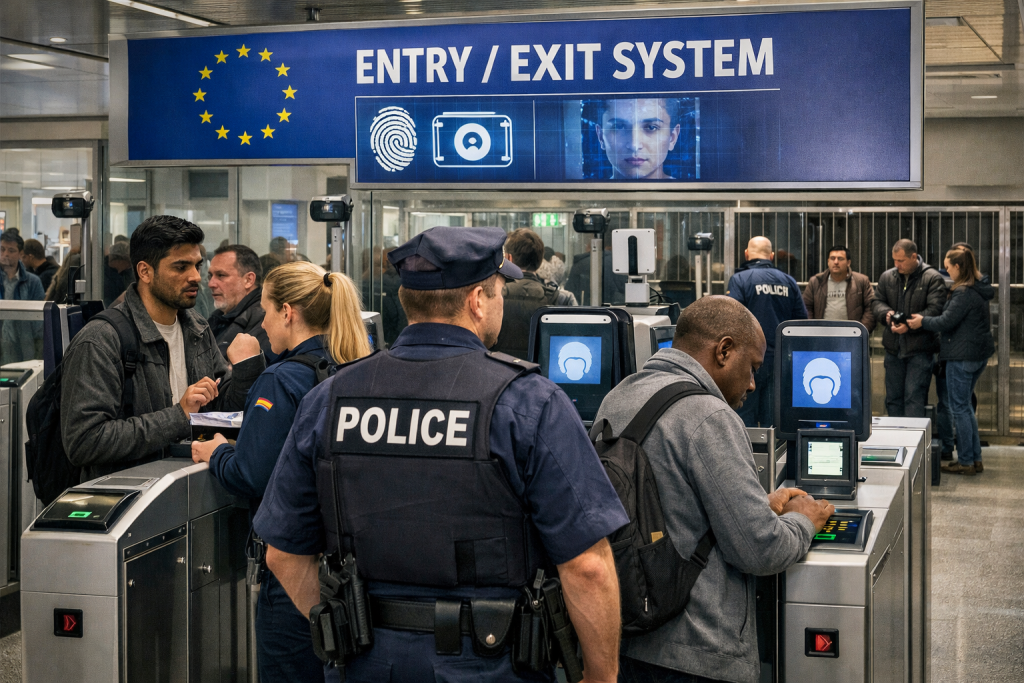
Europe has introduced a major shift in border control with the launch of the Entry/Exit System (EES), replacing manual passport stamping with biometric tracking. In its first four months, the system has already revealed important patterns in traveler behavior, particularly regarding overstays in the Schengen Area.
1. Early Results and Key Figures
During its initial phase, EES processed around 17 million travelers and recorded 30 million border crossings. The system flagged more than 4,000 individuals for overstaying and led to approximately 16,000 entry refusals. Notably, about 25% of these refusals were directly linked to violations of the Schengen 90/180-day rule, highlighting the system’s effectiveness in identifying non-compliance.
2. How the EES System Works
EES collects biometric data such as fingerprints and facial images to monitor the entry and exit of non-EU nationals. It automatically calculates the duration of each stay, ensuring compliance with the rule that allows a maximum of 90 days within any 180-day period. This digital approach replaces the previous reliance on manual passport stamps, which were often unreliable.
3. Implementation Challenges and Delays
Although technically operational, the rollout has faced practical difficulties. Airports like Paris Charles de Gaulle Airport and Lisbon Airport reported delays due to technical malfunctions and congestion. Border processing times have increased significantly, with some travelers experiencing waits of up to three hours. The system is being introduced in phases, with full implementation expected by April 2026.
4. Policy Impact and Visa Suspension Risks
EES data is now feeding into the EU’s updated visa suspension mechanism, which lowers the threshold for suspending visa-free travel from a 50% to a 30% increase in overstays. This gives authorities real-time insights into which nationalities are violating rules. Additionally, citizenship-by-investment (CBI) programs are now considered a standalone risk factor, increasing pressure on countries offering such schemes.
5. Future Systems and Increased Monitoring
EES is part of a broader border control framework that will soon include the European Travel Information and Authorization System (ETIAS). While EES tracks travelers inside the Schengen Area, ETIAS will screen them before entry. This layered system raises concerns, especially among CBI stakeholders, about stricter scrutiny and possible indirect restrictions on certain passport holders.

Summary
The introduction of EES marks a turning point in how Europe manages its borders. By digitizing and automating tracking, the EU has significantly improved its ability to detect overstays and enforce immigration rules. However, technical challenges, longer wait times, and broader policy implications—especially for visa-free countries and CBI programs—suggest that the system’s impact will extend far beyond border control into global mobility and migration policies.

